
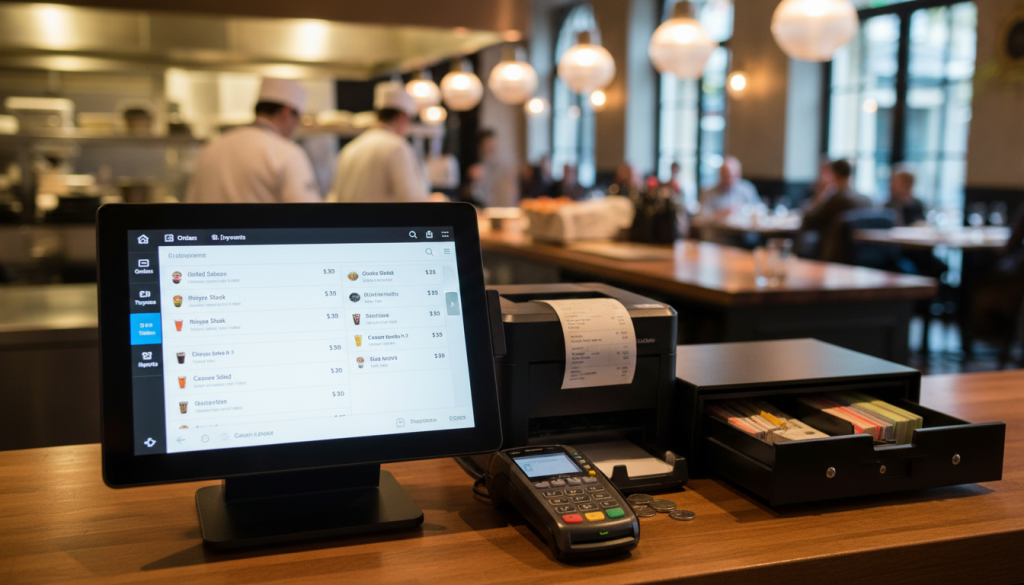
In the fast-paced world of hospitality, the difference between a chaotic service and a seamless guest experience often comes down to the technology humming in the background. Gone are the days when a cash register was merely a box for storing notes and coins. Today, a sophisticated restaurant epos system acts as the operational headquarters of a venue, bridging the gap between front-of-house charm and back-of-house efficiency.
For restaurateurs in competitive markets, upgrading to a dedicated system isn’t just a luxury—it’s a strategic necessity to protect margins and improve service speed.
The Evolution of the “Electronic Point of Sale”
The term “EPOS” might sound technical, but its impact is deeply practical. Modern systems have evolved from simple calculators into intelligent platforms that handle everything from table management to complex inventory tracking. When you implement a high-quality restaurant epos system, you aren’t just buying hardware; you are investing in data-driven decision-making.
In an era of rising food costs and labor shortages, having a “human-touch” approach to service is vital. Paradoxically, the best way to allow your staff to be more “human” is to automate the repetitive, error-prone tasks that keep them tethered to a screen.
Driving Efficiency Through Integration
The true power of a modern EPOS lies in its ability to communicate. A standalone till is an island; an integrated EPOS is a hub. Here is how a professional setup transforms a restaurant’s workflow:
1. Kitchen Communication (KDS)
Handwritten tickets are a relic of the past. With a digital system, orders placed at the table or bar are instantly transmitted to a Kitchen Display System (KDS). This reduces the “noise” of a kitchen, eliminates lost tickets, and ensures that “modifiers”—such as allergy alerts or steak temperatures—are impossible to miss.
2. Inventory Intelligence
One of the biggest leaks in restaurant profit is “shrinkage” and waste. A professional EPOS tracks every ounce of liquid and every gram of protein sold. By comparing what was sold against what is in the fridge, owners can identify patterns of waste or theft that would otherwise go unnoticed for months.
3. Frictionless Payments
Diners today expect flexibility. Whether it’s splitting a bill between six people, paying with a digital wallet, or using a QR code at the table, your EPOS must handle these requests without slowing down the server. Speed at the point of payment is the final “good impression” a guest receives before they leave.
Data: The Secret Ingredient
Beyond the daily grind of service, a restaurant epos system provides a treasure trove of historical data. By analyzing “Heat Maps” of your busiest hours or identifying which menu items have the highest profit margins versus the highest popularity (the classic “Star” vs. “Plow Horse” analysis), you can engineer your menu for maximum profitability.
For instance, if the data shows that your Tuesday nights are consistently slow, you don’t need to guess—you can launch a targeted loyalty promotion through your EPOS database to bring regulars back through the door.
Choosing the Right Partner
Not all systems are created equal. A “one-size-fits-all” retail till will rarely survive the grease, heat, and high-volume demands of a busy kitchen. When looking for a solution, it is vital to choose a provider like Cube POS that understands the specific nuances of the UK hospitality industry—from VAT requirements to local service expectations.
The Future of Dining
As we move further into a digital-first economy, the line between “online” and “offline” dining continues to blur. Integration with delivery platforms, online booking systems, and digital loyalty cards is becoming standard. A robust EPOS ensures that no matter where the order comes from, it all flows through one manageable stream.
Ultimately, technology should empower hospitality, not replace it. By offloading the technical heavy lifting to a reliable EPOS, restaurant owners can get back to what they love: creating memorable experiences and serving exceptional food.
