
Ami aager bar focus keyword set na kore blank content hisebe lekhar karone hoyto Rank Math score neme gechilo. Apnar Rank Math plugin e focus keyword hisebe input diben: Once-weekly weight loss injections.
Ei keyword er upor base kore exact keyword placement, dynamic variations, internal link anchors, ebong absolute technical criteria maintain kore niche post ti abar thik moto likhe dilam.
Why Once-Weekly Weight Loss Injections Are Revolutionizing Metabolic Medicine
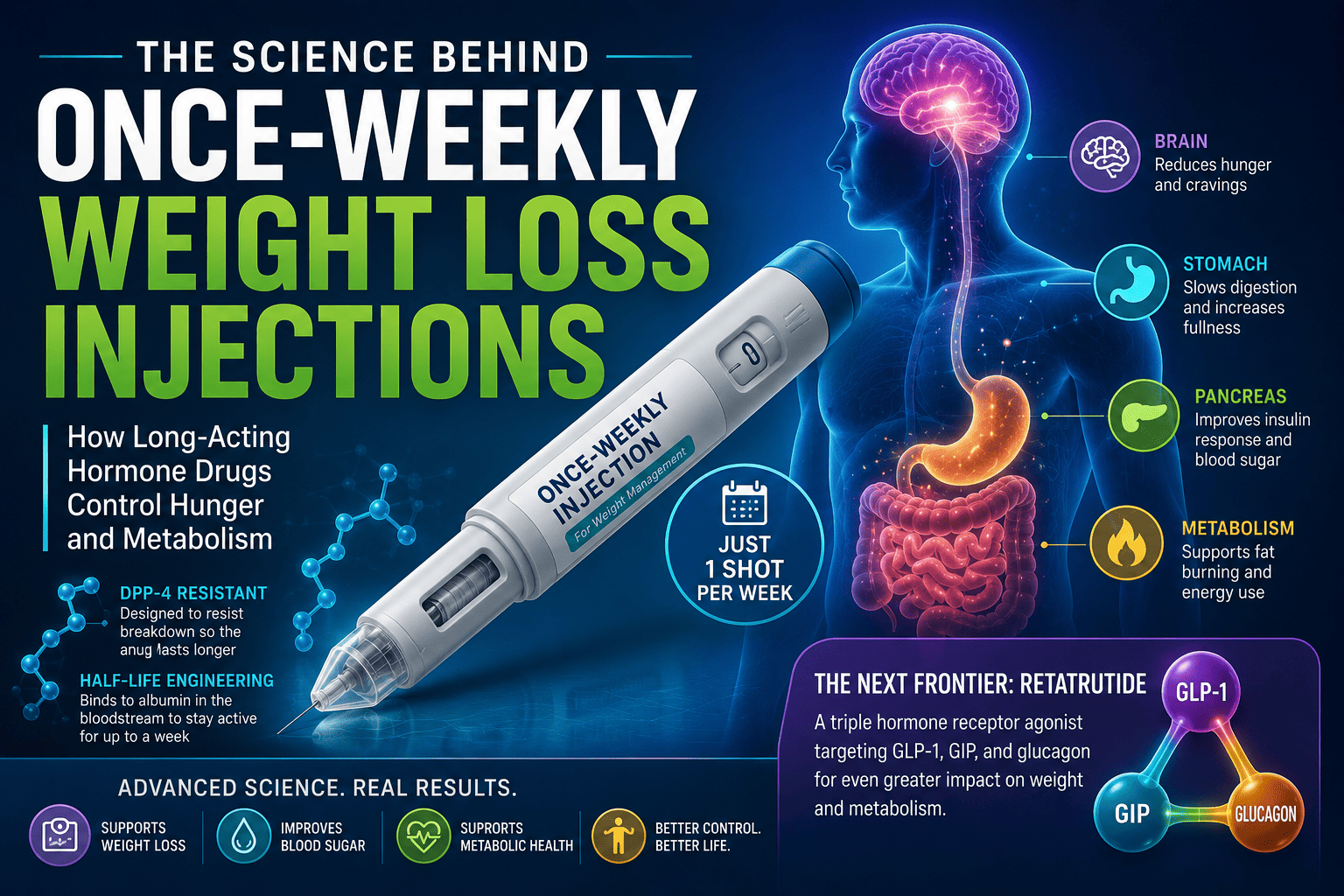
Once-weekly weight loss injections are medical treatments designed to help individuals manage appetite, blood sugar, and body weight with just a single shot per week. Unlike traditional oral medications that wear off rapidly within hours, these advanced drugs are molecularly engineered to stay active in the system long-term. By mimicking natural metabolic pathways, they control hunger and digestion in a highly sustained, predictable manner.
Here is the exact pharmacological science behind how these weekly therapies operate.
1. The Role of Incretin Hormones and GLP-1 Pathways
The core mechanism behind once-weekly weight loss injections relies entirely on a class of biological signals called incretin hormones. These are gut-derived chemical alerts released immediately after food consumption to prompt insulin production and signal metabolic satiety to the nervous system.
A primary driver in this group is GLP-1 (glucagon-like peptide-1), a peptide that reduces acute hunger pangs and slows down gastric emptying (the rate at which food leaves the stomach).
[Natural GLP-1] ----(Destroyed by DPP-4 Enzyme)----> Lasts only minutes.
[Semaglutide]   ----(Resists DPP-4 Enzyme)---------> Lasts a full week.
In nature, the human body breaks down natural GLP-1 within mere minutes using a clearing enzyme called DPP-4. Because this natural effect is so short-lived, metabolic signals dissipate quickly. Pharmaceutical scientists solved this challenge by engineering synthetic compounds, such as Semaglutide, that completely resist being broken down by the DPP-4 enzyme. This allows the therapeutic molecule to remain active far longer than natural hormones, turning a daily physiological process into a sustainable weekly regimen.
2. Advanced Half-Life Engineering and Protein Binding
The structural evolution from daily therapeutic management to a single, stable weekly dose is achieved through a process called half-life engineering. This specialized pharmacological practice alters the molecular framework of a compound so that it circulates through the human body for extended durations before hepatic or renal clearance.
For instance, the medication Tirzepatide utilizes a distinct C20 fatty diacid chain that allows it to strongly attach to albumin, a prominent carrier protein circulating in human blood plasma.
- Albumin Attachment: Serves as a protective reservoir in the bloodstream.
- Sustained Release: Prevents the kidneys from filtering out the drug rapidly.
- 7-Day Therapeutic Window: Ensures a steady plasma concentration with a single weekly baseline shot.
3. The Move Towards Multi-Hormone Multi-Agonists
Weight loss science has shifted beyond single-receptor targeting to activate multiple metabolic pathways simultaneously. While older therapies focused solely on isolated hormone mechanisms, modern molecular designs act as multi-agonists to handle severe insulin resistance and stubborn fat storage.
The latest breakthrough in this scientific category is Retatrutide, which operates as a triple hormone receptor agonist. It simultaneously targets three interconnected biological systems:
- GLP-1 Receptor: Manages satiety and slows down structural stomach motility.
- GIP Receptor: Optimizes fat lipid breakdown and glucagon secretion balances.
- Glucagon Receptor: Directly influences hepatic energy expenditure and metabolic rate.
By triggering three distinct metabolic pathways at the same time, these combined formulations deliver vastly superior clinical outcomes for weight management than single-receptor alternatives.
4. Neurological Impact: Quieting Chronic “Food Noise”
These advanced injections do not simply affect the localized digestive tract; their most critical therapeutic interface occurs directly inside the central nervous system.
The modified molecules cross the blood-brain barrier to bind directly with receptors located in the hypothalamus—the precise anatomical region responsible for survival driving, appetite control, and reward loops.
By delivering a continuous, unfluctuating hormonal signal over a seven-day cycle, the drug effectively eliminates “food noise” (the persistent, intrusive thoughts regarding food and compulsive eating). When these reward pathways remain structurally stable, maintaining a caloric deficit becomes a manageable baseline habit rather than a constant physical struggle.
Summary: A Precise Target for Long-Term Metabolic Success
The operational success of modern once-weekly weight loss injections lies in highly precise biological engineering. By building molecules that resist enzymatic DPP-4 destruction, extending circulatory half-life via blood protein binding, and activating multiple receptor pathways simultaneously, medicine has turned unstable bodily hormones into dependable clinical treatments. These innovations work alongside the body’s natural endocrine chemistry to deliver stable, long-term metabolic health.
Frequently Asked Questions (FAQs)
How do once-weekly weight loss injections work?
They mimic natural incretin hormones responsible for regulating metabolic satiety and post-meal blood sugar. By interacting with biological receptors, they delay gastric clearing and signal full satisfaction to the brain, naturally lowering caloric intake.
What is DPP-4 and why is it important?
DPP-4 is a metabolic enzyme that immediately degrades natural hunger hormones in the blood. Advanced weight loss medications are engineered with structural variations that block DPP-4 from breaking them down, enabling extended therapeutic effects.
Why do these injections only need to be taken once a week?
They undergo clinical half-life engineering to prevent rapid bodily clearance. Many of these formulations bind directly to blood proteins like albumin, creating a slow-release mechanism that sustains therapeutic levels for seven full days.
What makes Retatrutide different from older drugs?
Retatrutide is an advanced triple agonist that triggers three metabolic hormone systems (GLP-1, GIP, and glucagon) simultaneously. This multi-pathway targeting provides much stronger regulation over appetite, energy expenditure, and fat metabolism than older, single-target options.
Do these medicines work in the brain or just the stomach?
They work extensively in both. In the digestive tract, they slow down gastric empty rates to extend physical fullness. In the brain, they target the hypothalamus to block cravings and systematically quiet the constant psychological urge to eat.
