
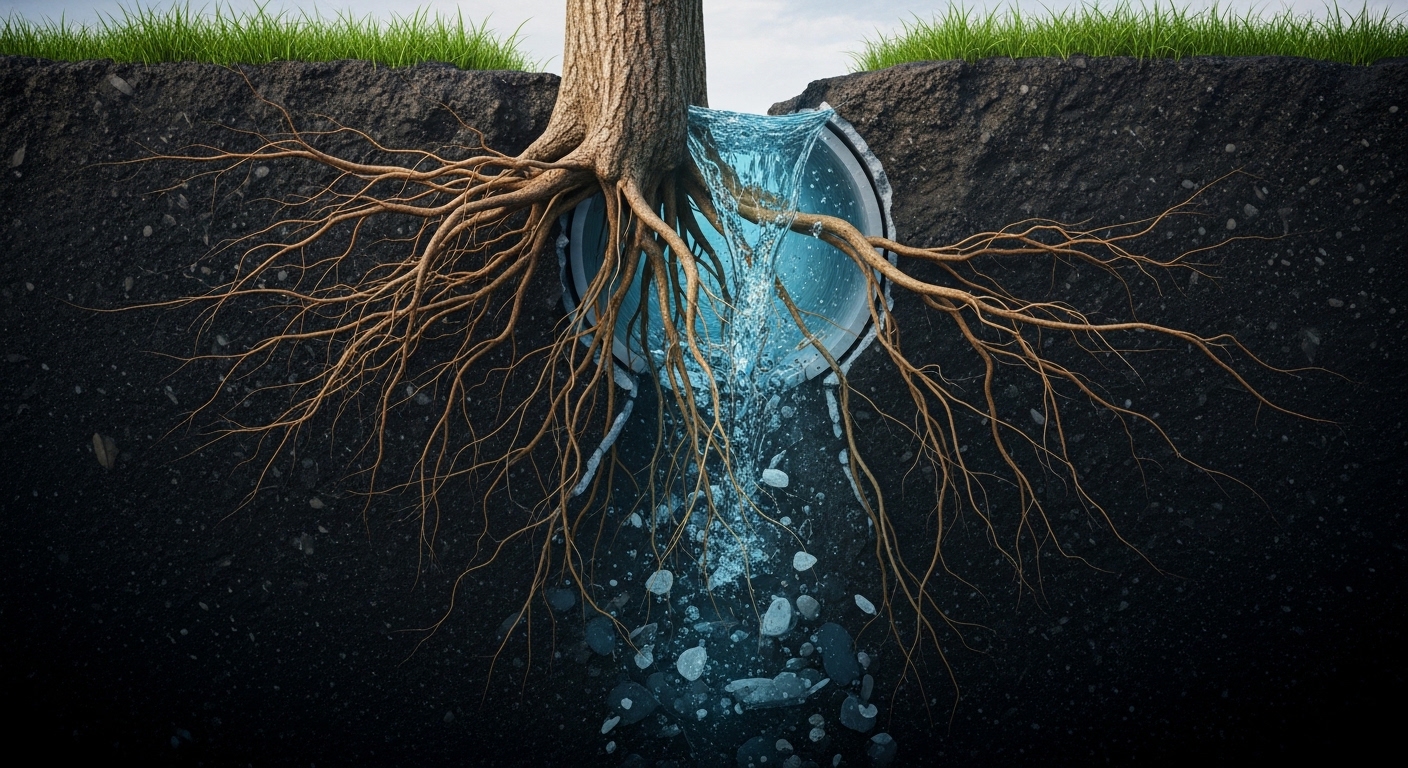
Mature trees add beauty, shade, and value to any property. However, their root systems can create serious problems for underground plumbing. When tree roots invade sewer lines, property owners often face repeated clogs, slow drains, and expensive repairs. Understanding the relationship between tree roots and sewer systems helps homeowners and businesses make informed decisions about sewer drain cleaning and preventive maintenance.
Why Tree Roots Invade Sewer Lines
Tree roots naturally grow toward moisture and nutrients. Sewer pipes, especially older clay or cast iron lines, release water vapor and small amounts of liquid through tiny cracks or loose joints. Roots detect these moisture sources from considerable distances and grow toward them.
Once a root finds even a hairline crack or a slightly separated joint, it enters the pipe. Inside the sewer line, roots encounter warm, nutrient-rich wastewater and ample oxygen. These conditions cause rapid growth. What begins as a thin rootlet can expand into a dense mass that fills the entire pipe diameter over time.
Signs of Tree Root Intrusion in Sewer Lines
Property owners should watch for specific warning signs that indicate tree roots may have entered the sewer system. Early detection makes sewer drain cleaning more effective and less costly.
Slow draining sinks and tubs often appear first. Water takes longer than usual to empty because roots restrict flow. Gurgling sounds from toilets or drains indicate trapped air struggling to pass through root-blocked pipes. Recurring clogs that return shortly after snaking or plunging strongly suggest roots are regrowing inside the line. Sewage odors around floor drains or cleanouts occur when waste materials accumulate behind root masses. Wet or sunken spots in the yard above the sewer line may signal leaking wastewater escaping around root-damaged pipes.

How Roots Complicate Sewer Drain Cleaning
Tree roots transform a simple clog into a recurring maintenance challenge. Unlike grease or soap buildup, roots are living organisms that regrow quickly after partial removal. Standard drain snakes often punch a small hole through the root mass but leave the bulk of the intrusion intact. Within weeks or months, the roots expand again, recreating the blockage.
Professional sewer drain cleaning for root intrusion requires specialized equipment and techniques. Mechanical augers with cutting blades can shred smaller roots, but larger infestations demand more thorough methods. Many plumbers now recommend hydro jet drain cleaning as the preferred solution for root-affected lines because the high-pressure water stream cuts through roots and flushes debris completely out of the pipe.
Inspection Methods for Root-Damaged Sewer Lines
Before performing sewer drain cleaning on suspected root intrusions, a proper inspection is essential. Sewer cameras provide real-time video footage of the pipe interior. A trained technician inserts a flexible camera cable into the cleanout or a removed toilet flange and guides it through the sewer line.
The camera reveals the exact location, size, and density of root masses. It also shows the condition of the pipe walls, including cracks, offset joints, or collapsed sections. This information determines whether hydro jet drain cleaning alone will solve the problem or if pipe repair or replacement is necessary.
Hydro Jet Drain Cleaning for Root Intrusion
Hydro jet drain cleaning uses a specialized hose with a high-pressure nozzle that releases water at pressures between 1,500 and 4,000 PSI. The water stream cuts through soft roots, grease, scale, and debris while the hose moves forward through the pipe. Rotating nozzles direct water jets in multiple directions, scouring the entire pipe circumference.
For root intrusions, hydro jet drain cleaning offers significant advantages over snaking. The high-pressure water removes root fragments completely rather than just poking a hole. It also washes away the slime layer and debris that roots cling to, slowing their regrowth. Many property owners find that professional hydro jet drain cleaning provides longer-lasting results compared to traditional methods.
When Snaking Is Not Enough for Root Clogs
Traditional drain snakes and augers have limitations when dealing with tree roots. A snake typically measures one-quarter to one-half inch in diameter and pushes through the center of the clog. It creates a temporary passage but leaves root masses attached to the pipe walls. Within weeks, the roots grow back, often denser than before.
Repeated snaking can even damage older pipes. The twisting action of a heavy auger may crack fragile clay or cast iron lines, creating new entry points for more roots. For properties with recurring root problems, hydro jet drain cleaning provides a more complete solution that restores full pipe diameter and delays future regrowth.
Preventive Measures to Reduce Root Intrusion
After professional sewer drain cleaning removes existing roots, property owners can take steps to slow future intrusions. Regular maintenance is the most effective strategy. Scheduling sewer drain cleaning every 12 to 24 months removes small root hairs before they become large masses.
Root barriers made of metal or plastic sheeting can be installed vertically between trees and sewer lines. These barriers redirect root growth downward or away from pipes. Some property owners choose slow-release root inhibitors applied through the sewer line. These foams or crystals discourage root regrowth without harming the tree itself. However, professional hydro jet drain cleaning remains the most reliable method for clearing established root intrusions.
Professional vs DIY Root Removal
Property owners sometimes attempt DIY solutions for tree root clogs. Chemical root killers purchased at hardware stores promise to dissolve roots without harming trees. In practice, these chemicals rarely reach the full length of the intrusion. They may also damage pipe materials or harm soil biology around the sewer line.
Mechanical drain snakes available for rent lack the power and cutting ability of professional equipment. A homeowner may spend hours trying to clear a root mass without success. Professional sewer drain cleaning services use industrial-grade equipment operated by trained technicians. Companies like Empire Sewer And Water Inc provide camera inspections followed by targeted hydro jet drain cleaning or mechanical cutting based on the specific root condition.
Long-Term Solutions for Recurring Root Problems
Some properties experience repeated root intrusions despite regular sewer drain cleaning. In these cases, pipe repair or replacement may be the most cost-effective long-term solution. Trenchless pipe lining methods insert an epoxy-saturated liner into the existing pipe. The liner cures to form a smooth, seamless interior surface. Roots cannot penetrate the liner, and the smooth surface resists debris buildup.
Pipe bursting is another trenchless option that breaks the old pipe while pulling a new pipe into place. Both methods eliminate root entry points without destroying landscaping. For property owners who prefer to keep existing pipes, more frequent hydro jet drain cleaning every six to twelve months can manage root regrowth without major construction.
Cost Considerations for Root-Related Sewer Drain Cleaning
The cost of sewer drain cleaning for tree roots varies based on several factors. The severity of the intrusion, pipe diameter, accessibility of cleanouts, and local labor rates all affect pricing. Hydro jet drain cleaning typically costs more than basic snaking because it requires specialized equipment and trained operators. However, the longer-lasting results often make it more economical over time.
Properties with recurring root problems that require multiple service calls per year may save money by investing in pipe lining or replacement. A one-time pipe repair eliminates years of repeated sewer drain cleaning expenses. Property owners should request camera inspections before committing to any service plan.
Environmental Factors Affecting Root Growth
Certain conditions accelerate tree root intrusion into sewer lines. Drought periods drive roots to seek moisture anywhere available, including tiny cracks in sewer pipes. Heavy clay soils that crack during dry weather create pathways for roots to reach deeper pipes. Older neighbourhoods with mature trees and aging clay or cast iron sewer lines face the highest risk.
Seasonal patterns also affect root-related clogs. Late summer and early fall often bring increased root activity as trees prepare for dormancy. Spring rains can cause rapid root growth followed by pipe blockages. Property owners in these high-risk areas benefit from preventive sewer drain cleaning scheduled before problem seasons begin.
Frequently Asked Questions
1. How do I know if tree roots are causing my sewer clogs?
Recurring clogs that return shortly after snaking, gurgling drains, slow drainage throughout the property, and wet spots in the yard above the sewer line are common signs. A professional sewer camera inspection provides definitive confirmation of root intrusion.
2. Can hydro jet drain cleaning remove large tree roots completely?
Hydro jet drain cleaning effectively cuts through soft roots, hair roots, and small to medium root masses. Very large, woody roots may require mechanical cutting with a root auger before hydro jetting can finish the job. A camera inspection determines the best approach.
3. How often should I schedule sewer drain cleaning if I have trees near my sewer line?
Properties with mature trees near sewer lines typically benefit from sewer drain cleaning every 12 months. Those with known recurring root problems may need service every six months. Hydro jet drain cleaning tends to provide longer intervals between cleanings compared to snaking.
4. Will removing the tree solve my sewer line root problem?
Not immediately. Dead tree roots can remain in the pipe for years, continuing to trap debris and cause clogs. Professional sewer drain cleaning is still required to remove the existing root mass. Additionally, nearby trees from neighbouring properties may still affect the line.
5. What is the most cost-effective long-term solution for recurring root intrusion?
For properties requiring sewer drain cleaning more than twice per year, trenchless pipe lining or replacement often becomes the most cost-effective solution. These methods create root-proof pipe interiors, eliminating the need for repeated service calls. A qualified professional can recommend the best option after camera inspection.
