
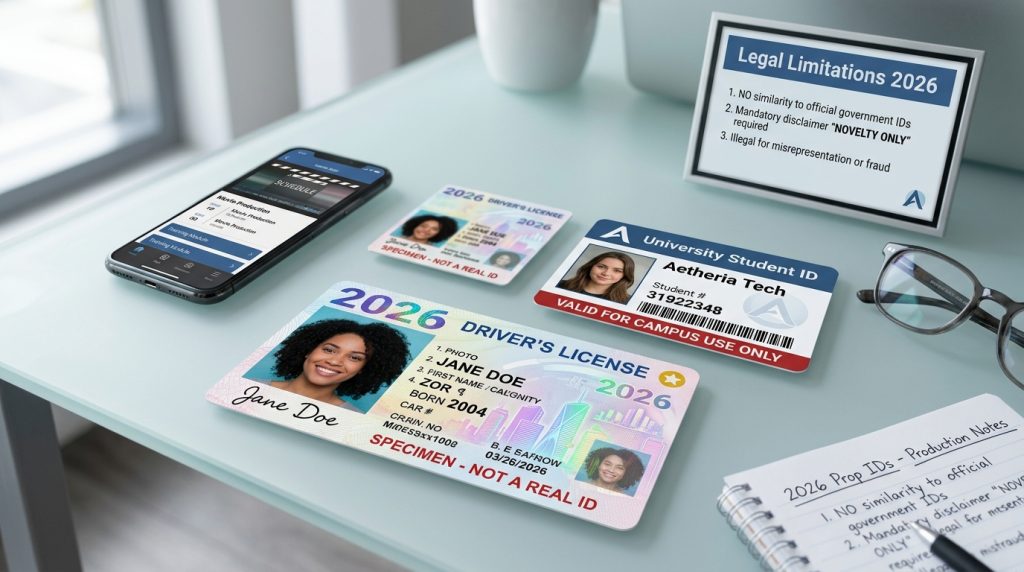
The landscape of identification has undergone significant changes in recent years. While digital wallets and biometric verification have become the standard for official government business, the demand for high-quality physical replicas remains steady within specific professional industries. In 2026, the distinction between official credentials and replicas is more defined than ever, driven by advancements in printing technology and a clearer understanding of their intended professional application.
Understanding these items requires a clear distinction between what they are and—more importantly—what they are not.
Understanding Professional and Creative Applications
Modern identification replicas serve several critical functions across various professional sectors. To ensure compliance and ethical standards, it is vital to understand the parameters of novelty ID legal use. These items are strictly non-government-issued documents designed for creative, educational, or professional simulation purposes. They are not legal identification documents and cannot be used to misrepresent one’s identity, age, or authority in any official capacity.
In 2026, several major sectors utilize these products for legitimate needs:
- Media and Film Production: As ultra-high-definition filming becomes the industry standard, props must withstand intense scrutiny. Set designers require realistic-looking identification for actors to ensure the audience remains immersed in the narrative.
- Educational Training: Security personnel and retail staff use these cards during training seminars to learn how to identify different card layouts and tactile features without handling sensitive, real-world data.
- Theater and Performance: Live stage productions require durable items that can withstand the rigors of a nightly touring schedule while maintaining a professional appearance.
Design and Technological Standards
Creating a realistic replica involves a complex manufacturing process that balances aesthetic accuracy with safety features. When examining a non official ID card, one will notice the inclusion of sophisticated elements such as microprinting, ultraviolet (UV) overlays, and tactile laser engraving.
Manufacturers in 2026 utilize specialized materials like Teslin or high-grade PVC that mimic the weight, flexibility, and “snap” of a real card. These features provide the high-end feel necessary for close-up shots in cinematography or as high-fidelity tactile aids in security workshops.
Safety and Responsibility
However, design is not just about mimicry; it is also about safety. Reputable producers ensure that while the cards look impressive, they contain subtle “design breaks” or markings that distinguish them from government-issued originals upon close inspection. This ensures that the item remains a “novelty” and is not easily mistaken for a legal credential in a high-stakes environment.
It is crucial to emphasize that novelty IDs are strictly for entertainment, decorative, or educational purposes. In 2026, transparency and responsible use are the industry standards. By utilizing these replicas strictly for their intended creative or training purposes, professionals can benefit from high-quality visual aids while respecting the legal frameworks that protect official identification systems. When used correctly, these items represent a unique intersection of graphic design and practical utility.
